


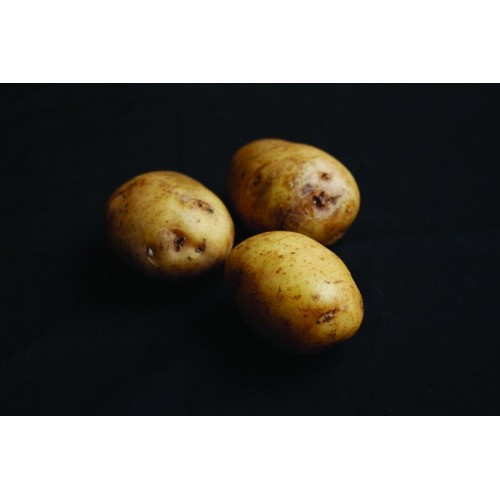
First Early.
Foremost seed potatoes (originally called Suttons Foremost) are an variety of heritage potatoes first added to the national variety list in 1954. Although Foremost was a instant hit with gardeners who liked it's excellent flavour and resistance to disintegration when boiling, it's average sized yields and disease resistance meant it never really took off commercially. That said, it does have good common scab resistance. Foremost potatoes are short to oval in shape with white skin and waxy white flesh. Winner of the RHS award of garden merit.
Good For; Boiling, Baking and Salads.
2kg Bag - Average 25 tubers.
- Plant first early potato crops from the end of February. Prior to planting, 'chit' the seed potatoes by setting them out in a cool, bright position (10C/ 50F) to allow them to sprout.
- When growing first early potatoes in the ground avoid planting in soil where potatoes have grown for two years in succession to reduce the risk of disease. Prepare the planting area in a sheltered position in full sun on moist well drained soil. Dig in plenty of well rotted manure. Plant potatoes in rows at a spacing of 30cm (12"). Rows should be set out 60cm (2') apart. Place the seed potatoes into 10cm (4") deep trenches and backfill the soil to refill the trenches. When shoots reach 20cm (8"), mound up soil around the shoots leaving just a few cm showing. Repeat this process after a further 3 weeks.
- Where space is limited, try growing potatoes in potato bags on the patio. Fill an 8 litre potato bag to just below the top of the bag with good quality compost mixed with some well rotted manure. Carefully plunge a single chitted potato tuber into the compost with the shoots pointing upwards at a depth of 12cm (5") from the soil surface. Place the bags in a sunny position and water regularly to keep the compost moist.
